Everyday Use
Before You Buy, Picture the Parking Lot
Some of the clearest purchase decisions happen before the outing begins: in the folding, lifting, loading, and storing that families repeat every time they go out.
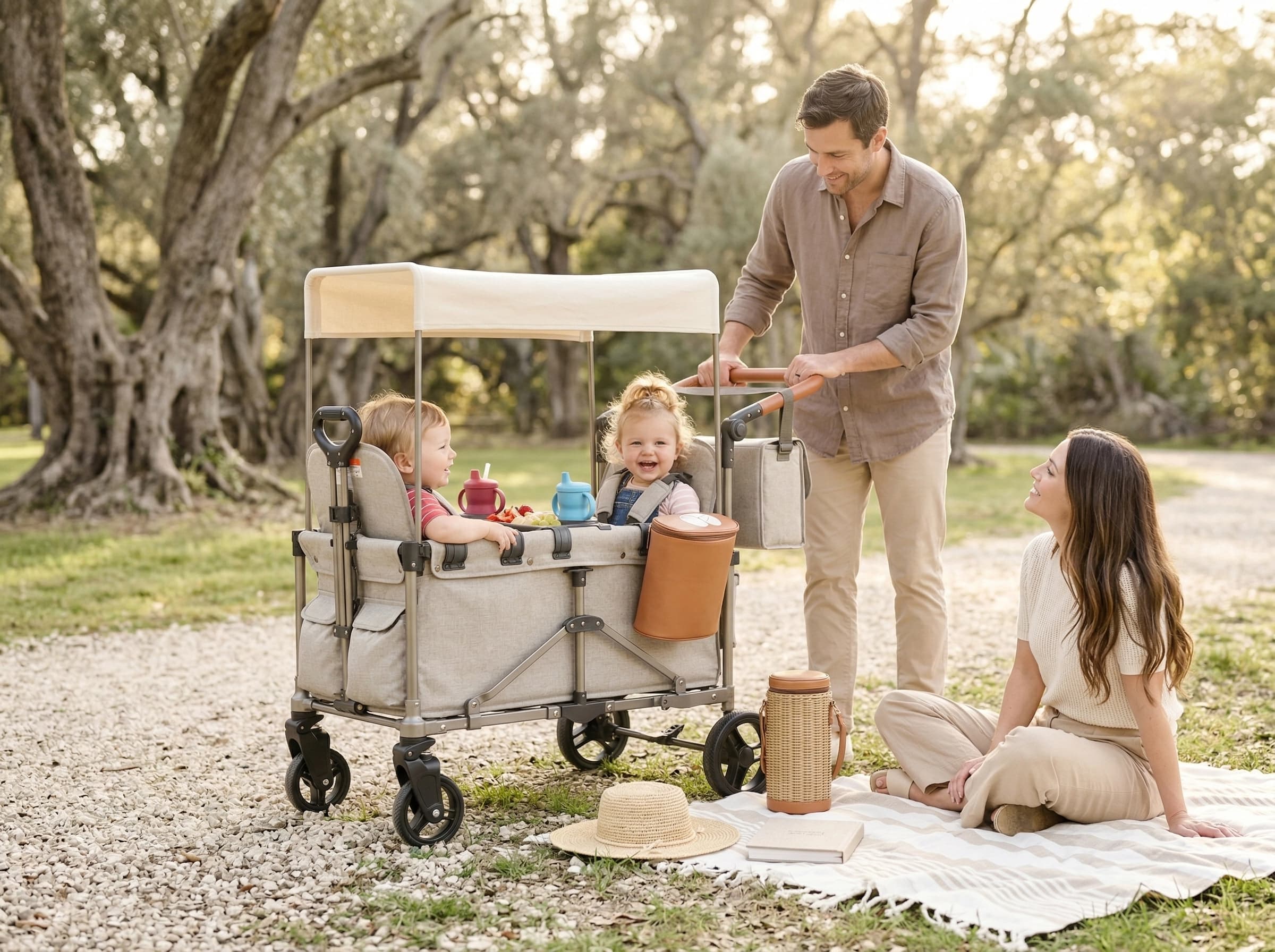
Some products look convincing only once they are already in motion. Family products deserve a quieter, tougher test than that.
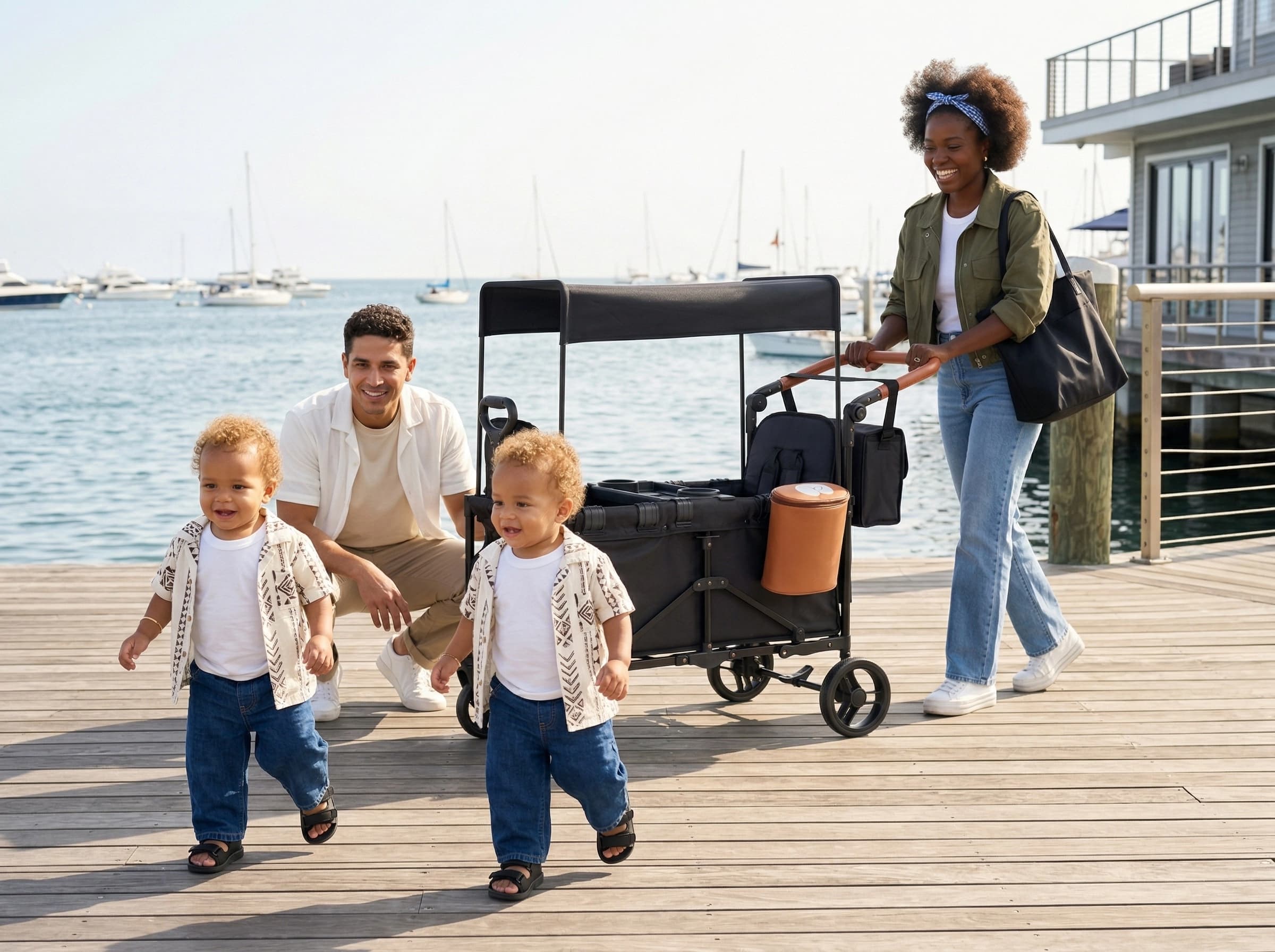
Before buying a stroller wagon, it helps to picture the moments around the outing rather than the outing itself. The parking lot. The trunk. The quick setup before everyone gets restless. The fold at the end of the day, when children are tired and adults are no longer interested in one more complicated task. That is often where convenience stops being a concept and becomes either relief or extra work.
Assembly, folding, trunk fit, lifting, and storage may sound less interesting than style or accessories. In real life, they are often what decide whether a product becomes part of the routine or starts to feel like something to work around.
The first setup matters more than people expect
Parents often ask whether a stroller wagon is easy to assemble out of the box. It is a practical question, but also a revealing one.
A product can be described as easy to assemble and still feel confusing in the first ten minutes. What matters is not only how long setup takes, but whether the experience feels clear. Are the handles intuitive to position? Do the canopy, harnesses, brake, and storage pieces make sense without guesswork? Does the first encounter leave you calmer, or more uncertain?
BudGlowey's product information is sensible on this point. It does not simply say easy assembly and move on; it pairs that with first-use checks. That is worth noticing. Convenience begins with confidence, and confidence usually begins with a setup that feels legible from the start.
In family life, legibility is underrated. A product that makes sense at a glance reduces decision fatigue before the outing has even begun. That may sound small, but small reductions in effort are often what make repeated use possible.
The return home is the real test
It is easy to imagine leaving the house. It is harder to imagine the fold at the end.
By then, the day has already happened. Snacks are finished, children are tired, someone may be carrying a jacket that no longer fits in any bag, and the adult in charge of folding the wagon is not hoping for an engineering puzzle. A product that closes down with reasonable ease earns trust quickly.
That is why questions like "Does it fold easily?" and "Can it be stored without removing parts?" matter so much. They are really questions about whether the product works with tired family energy, not ideal family energy.
BudGlowey's current models list a folded size of 34.3 in x 21.3 in x 15.4 in. Useful, yes. But numbers become meaningful only when they are translated into a real habit. Can you picture folding it after a long zoo day while also watching children and gathering the last few things from the seat? That small thought exercise often tells families more than the word portable ever could.
Trunk fit is more specific than it sounds
Families naturally ask whether a stroller wagon will fit in the trunk. The only trouble is that the question is often treated too generally.
The better approach is to compare two very specific things before buying:
- the folded dimensions of the wagon
- the actual opening and usable space of your vehicle
That second point matters more than people expect. Trunk fit is not only about how much space a vehicle has. It is about the shape of the opening, what already lives in the back, and whether lifting the wagon in and out feels realistic for the way your family moves.
BudGlowey lists both current wagons at 32 pounds. For some families that will feel straightforward. For others, especially if loading tends to happen one-handed while keeping a toddler nearby, it is still something to think through honestly. That honesty is useful. It prevents the kind of disappointment that only shows up after purchase.
There is a particular kind of buying mistake that happens when people evaluate a family product only in its best moment. The real test is broader than that. It includes the lift, the awkward angle, the weather, the impatience, the rushed return. A good choice does not remove those things entirely. It simply does not add unnecessary strain to them.
Storage at home deserves the same attention
A stroller wagon does not live only on outings. It also lives in the space between them.
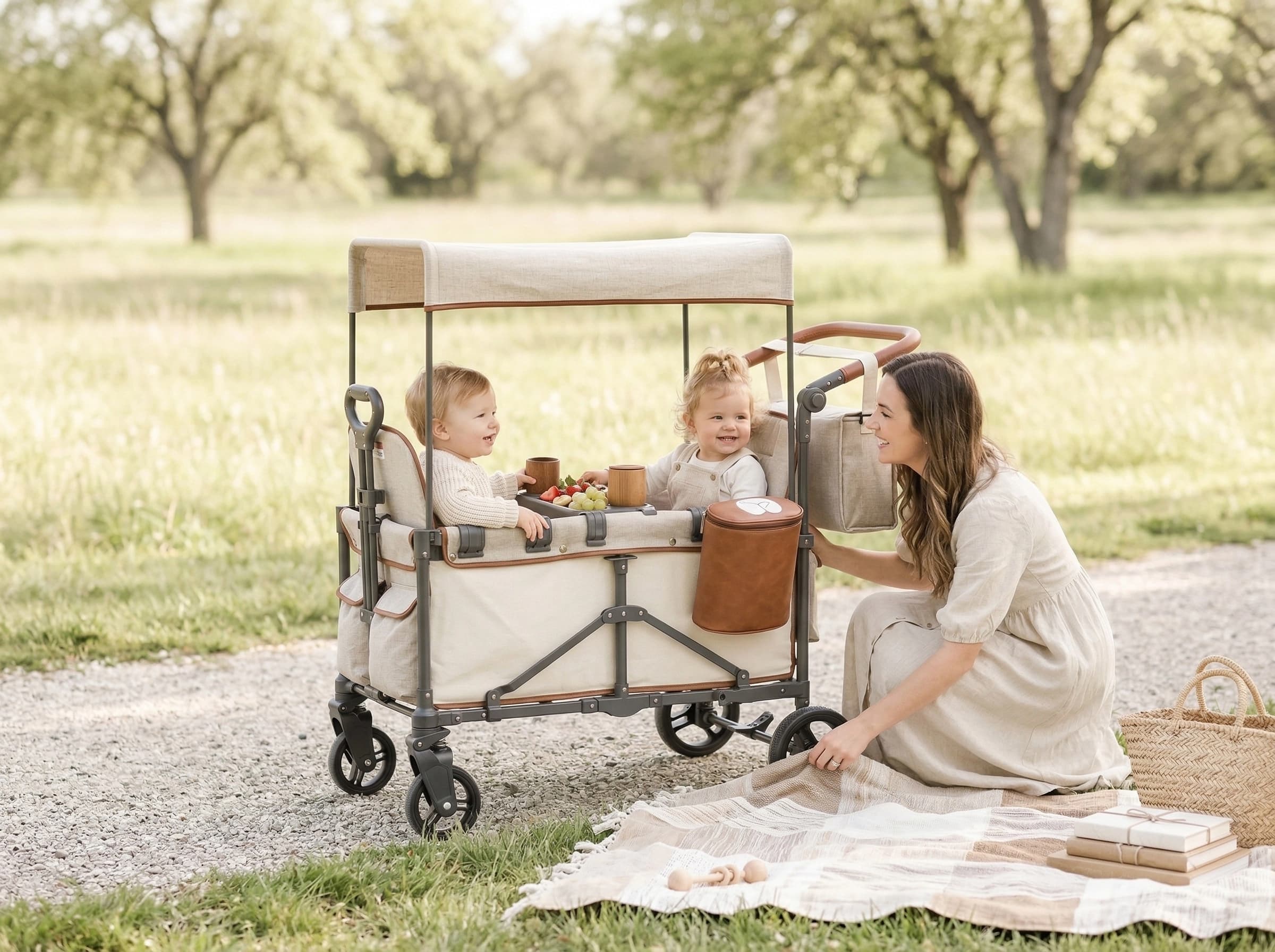
Where does it go when you get home? The garage, the trunk, an entryway corner, a closet, beside other gear? Does that place make the next outing easier, or slightly harder? A product can fold perfectly well and still become awkward if it has no natural resting place in the home.
This is one reason simple, low-ceremony design matters so much in family life. Wipe it down, let it dry, fold it, store it, move on. The products that fit best into family routines are often the ones that ask for the least performance offstage.
A better buying question
Before buying, picture the wagon across one complete route.
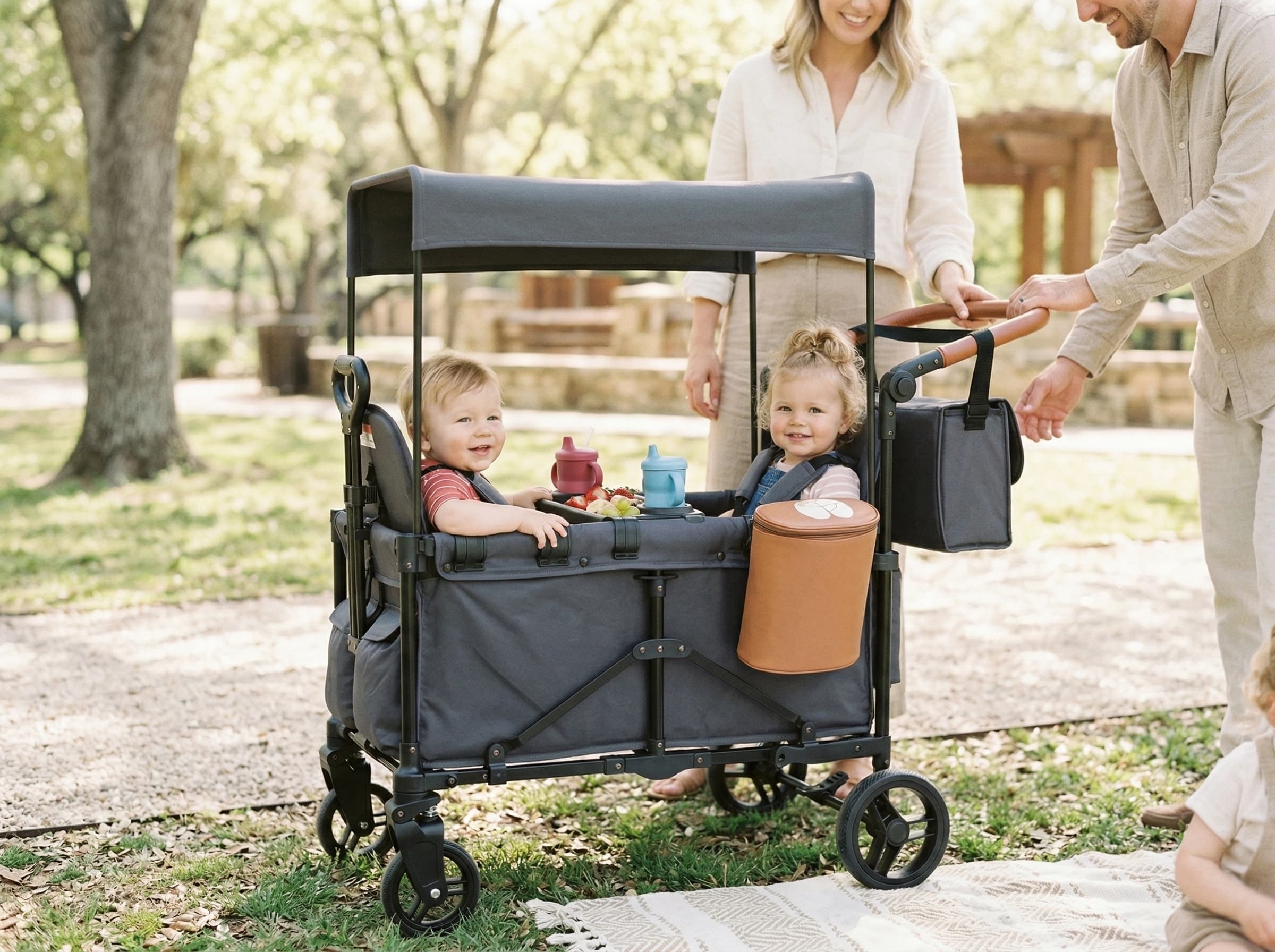
You open the trunk. You unfold the wagon. You load the children. You add the snacks, layers, water, and small parent essentials. You move through the outing. Then you do it all in reverse when everyone is less patient than they were at the start.
If the product still feels realistic in that picture, you are probably looking in the right direction.
That is the question behind all the practical details: not whether the stroller wagon photographs well in use, but whether it behaves well at the moments families are most likely to be rushed, distracted, or tired.
The right choice helps on the path, certainly. But it also helps before the path begins and after it ends. For most families, that is what convenience actually means: not only movement, but the grace around movement.
Stay Updated
Weekly newsletter
Real parenting stories, outdoor adventure ideas, and family tips delivered every Friday.
No spam, unsubscribe anytime. Privacy policy.
Takeaway
Try one little outing this week
You do not need a perfect plan. Pick one simple family outing and make it easier with small preparation.