Family Planning
Two Seats or Four? Choose for the Family You Have Now
The choice between a two-seat and four-seat wagon stroller is usually less about buying bigger and more about choosing for the rhythm your family is already living.
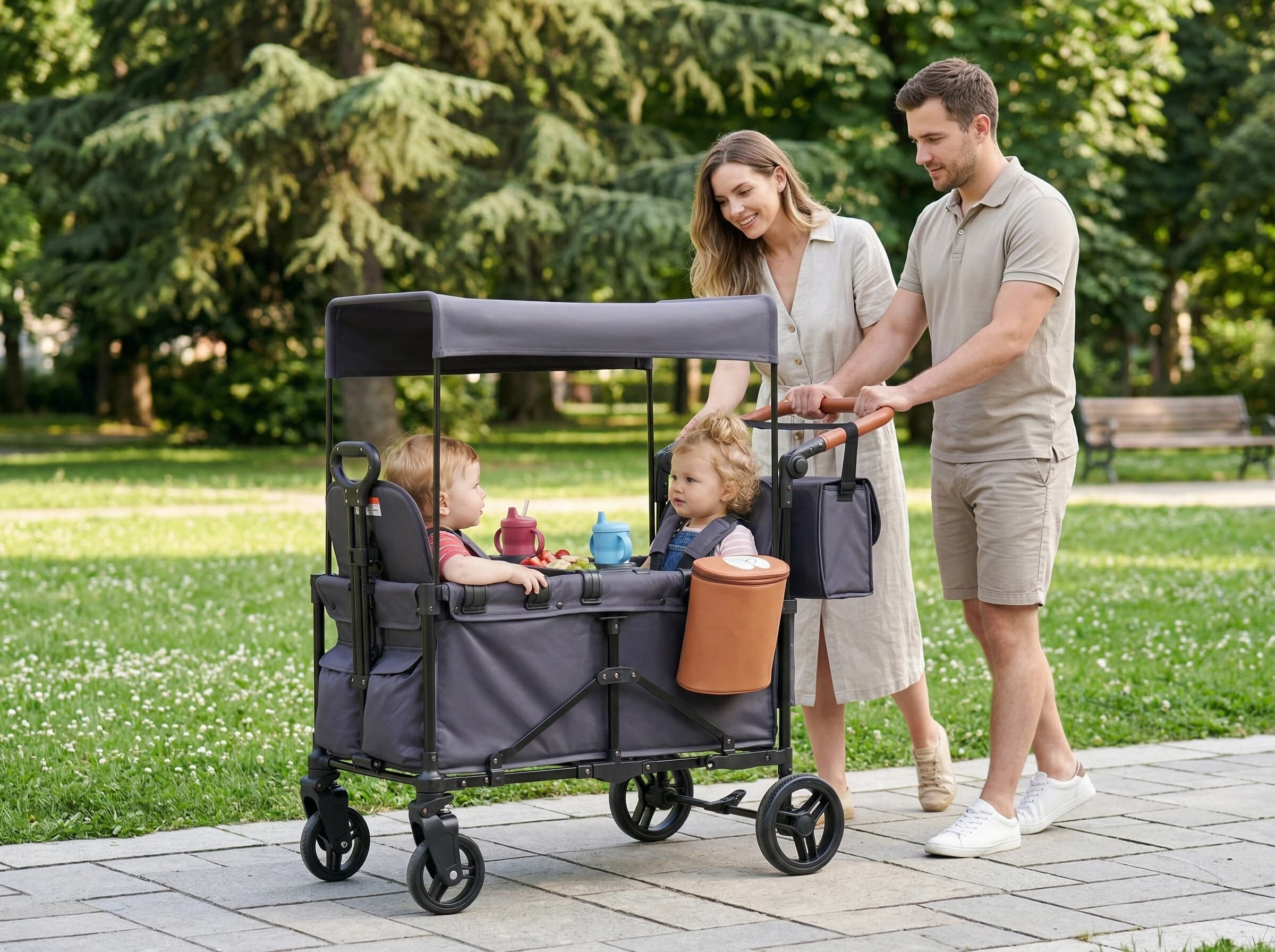
When families compare a two-seat wagon stroller with a four-seat version, the temptation is easy to understand. If more seats sound more flexible, why not simply buy for the future and be done with it?
The trouble is that family gear rarely works best in theory. It works best when it fits the life a family is actually living now. The right choice is rarely about seat count alone. It is about routine, frequency, storage, and the kind of outings that happen often enough to matter.
In that sense, two seats or four is really a question about family stage.
Bigger is not always easier
There is a quiet assumption in many buying decisions that more capacity automatically means more value. Sometimes it does. Quite often, it simply means more product than a family wants to move through ordinary life.
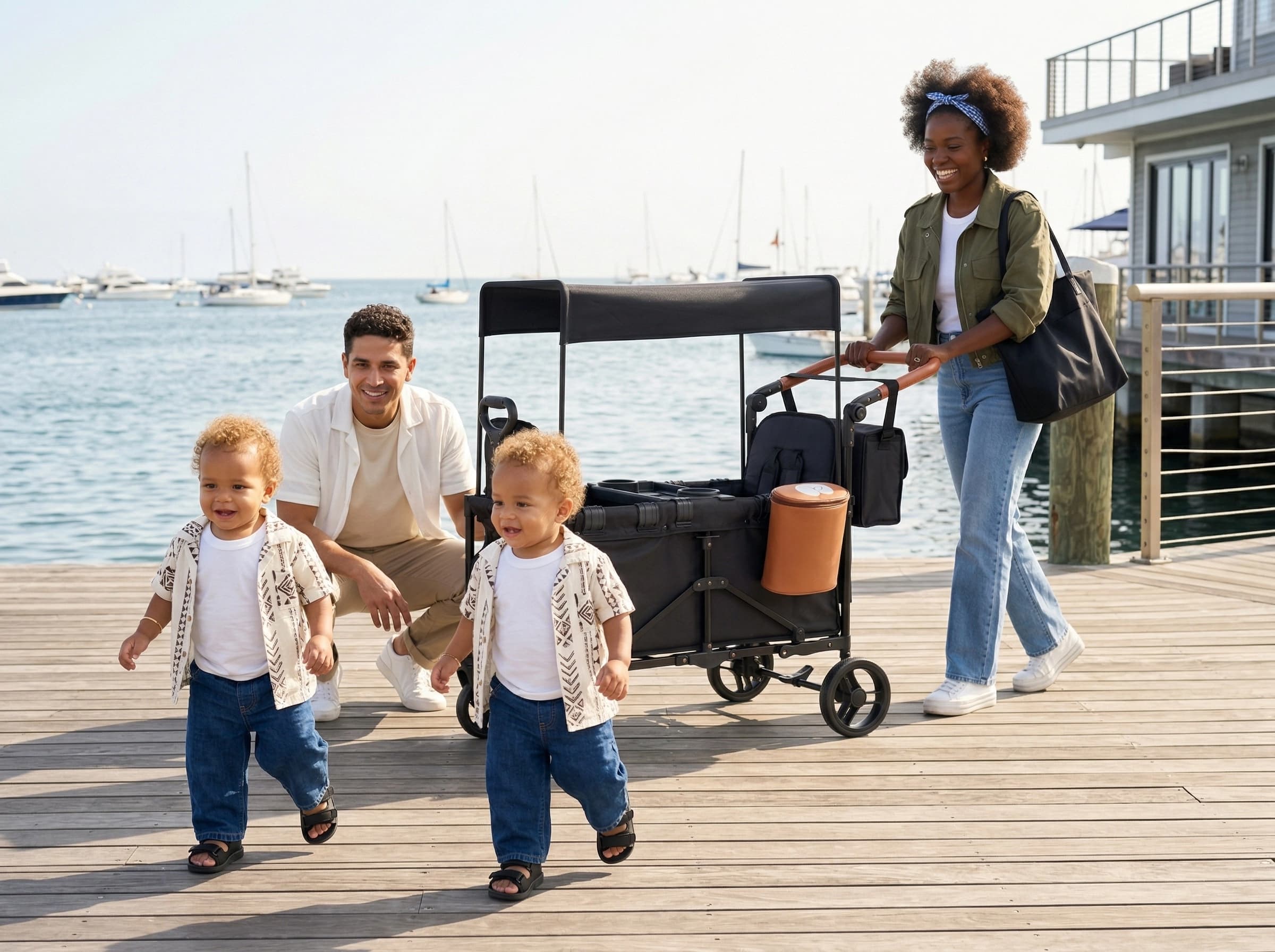
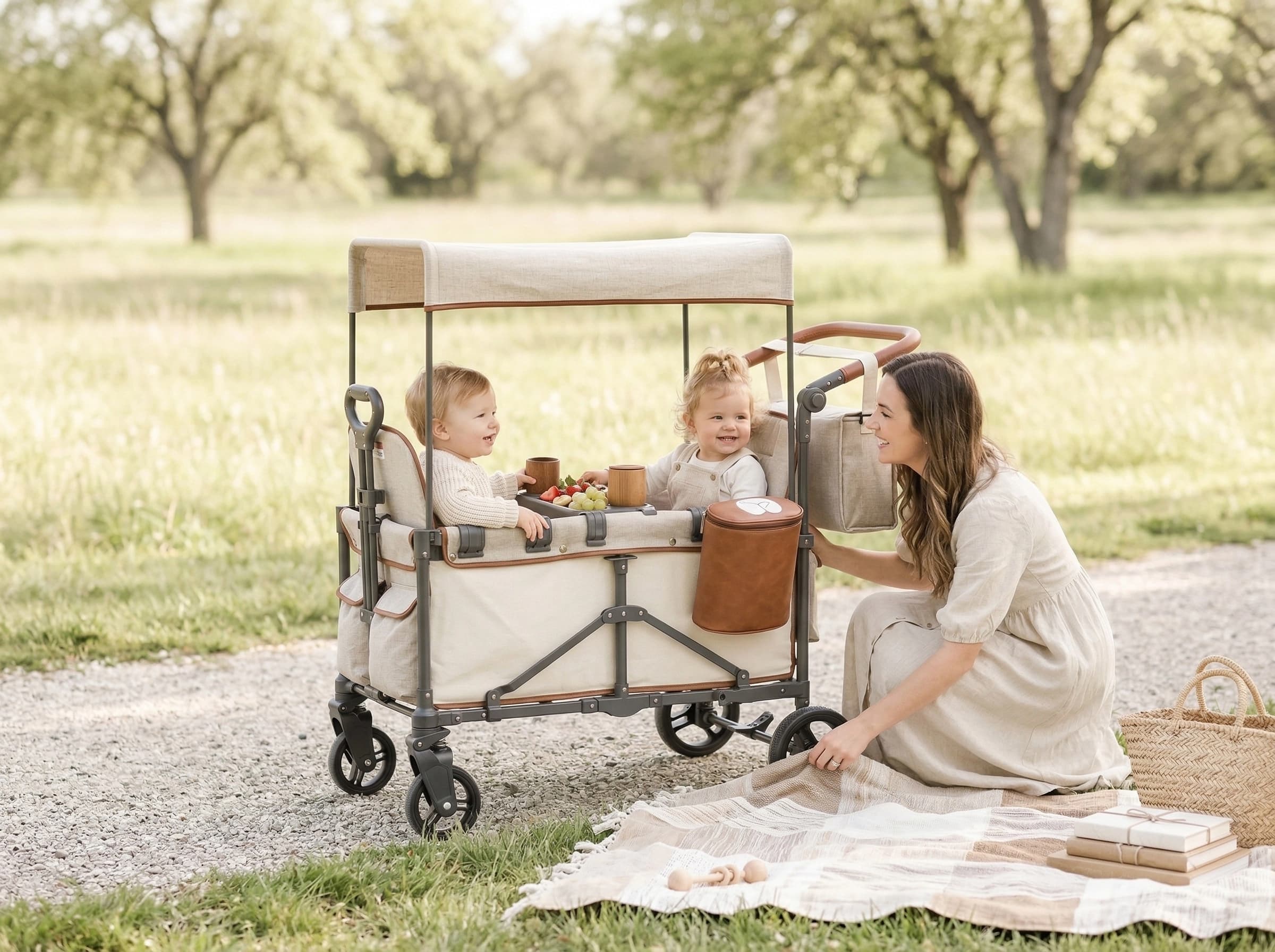
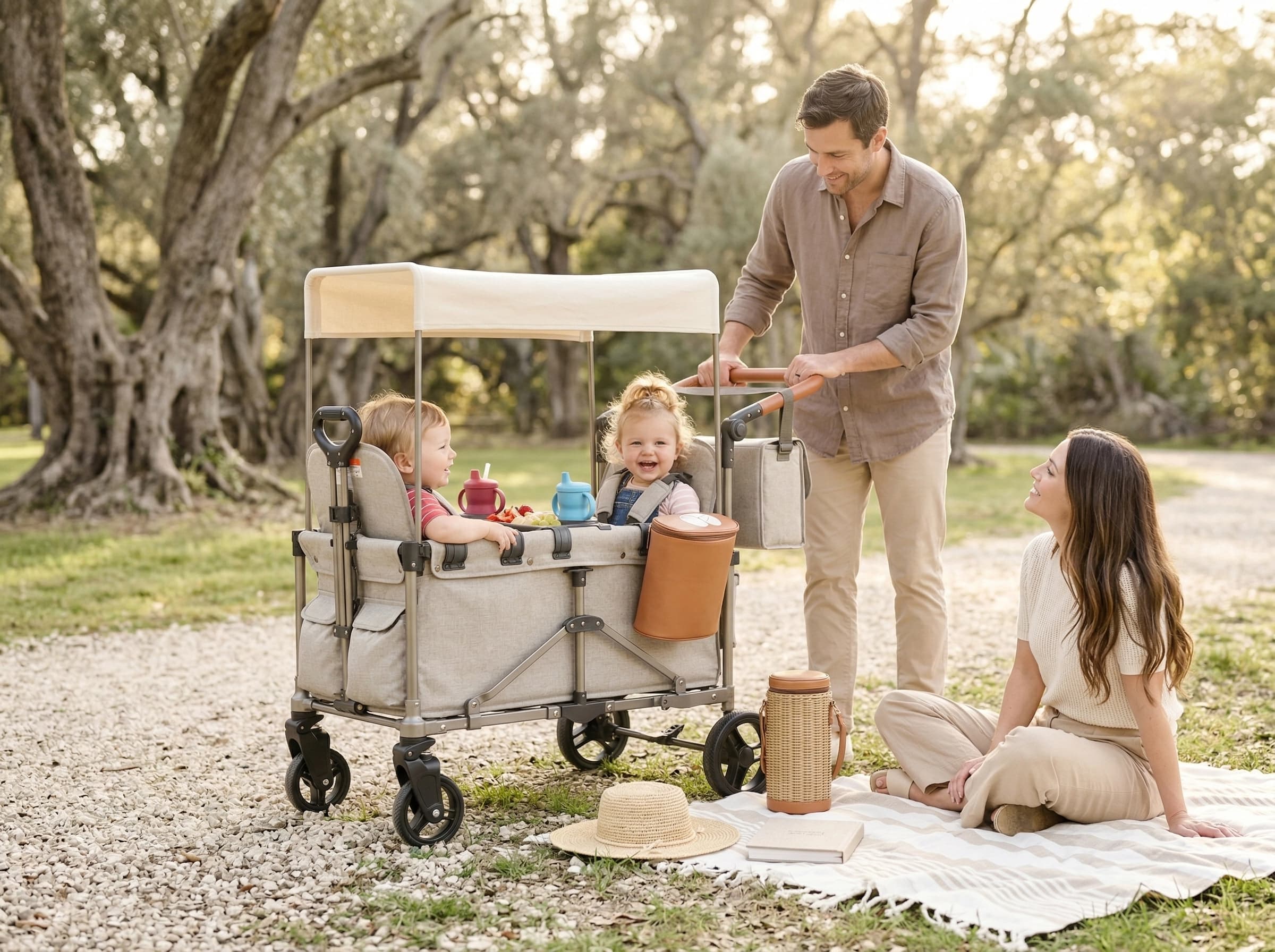
If most outings involve one or two children, a more compact two-seat layout may feel easier to live with day to day. It can be simpler to load, easier to organize mentally, and better suited to the families whose weeks are built around neighborhood walks, park stops, errands, and occasional longer day trips.
If your family regularly moves with more children, siblings close in age, cousins, or outing days where shared seating is genuinely useful, a four-seat layout begins to make clearer sense. The larger format is not valuable because it is larger. It is valuable because it answers a real pattern of use.
This is also why BudGlowey's two models tell slightly different stories. The two-seater is framed around compact, everyday use. The four-seater is framed more around bigger outing days, multi-child planning, and longer group movement. That distinction is helpful because it keeps the decision grounded in life rather than abstraction.
There is also a subtle emotional difference between the two choices. A smaller setup can feel calmer, easier to store, easier to bring almost by default. A larger setup can feel more generous, more prepared, more suited to a family whose outings are rarely minimal. Neither feeling is inherently better. The important thing is to notice which one sounds like your life.
Start with the outing you repeat most
A good rule is to choose for the outing you repeat most often, not the outing you imagine once in a while.
Ask yourself:
- How many children are usually with us?
- How often do we actually need every seat?
- Are our most common outings short and routine, or larger and more event-based?
- Do we need seating first, storage first, or both equally?
A family with two young children who mostly does neighborhood loops, park mornings, and casual weekend outings may find that a two-seat wagon covers nearly everything they need without asking them to manage more than necessary.
A family that often attends sports sidelines, school events, campground trips, or larger shared outings may feel the benefit of a four-seat arrangement much more clearly. In those cases, the extra seating is not hypothetical. It solves a recurring need.
Capacity is more than a number
Families also ask about weight limits, and rightly so. Capacity should always be part of the decision. It simply helps to think about it as two related questions:
- total supported load
- how that load is distributed in real use
BudGlowey lists both current models with a 176-pound maximum capacity, even though the seating layouts differ. So the decision is not only about chasing a higher number. It is about how many riders need a defined place, how their sizes compare, and whether the layout supports the outings you actually have in mind.
This is also where durability enters the conversation in a more interesting way. A durable stroller wagon is not only one made from sturdy materials. It is one being used in a way that suits both its design and the family's routine. Alloy steel frames, wipe-clean Oxford fabric, and secure harnesses matter. So does fit. The closer the match between the product and the pattern of use, the more likely it is to feel durable over time because it is not being asked to be the wrong thing.
Buying once does not always mean buying the most
Many parents are drawn to the idea of solving the question once and for several years. It is a sensible instinct. It can also lead to overbuying just as easily as underbuying.
The more useful kind of future-proofing is not automatically choosing the biggest option. It is choosing the one your family will use willingly and consistently in the current stage. A product that covers more possibilities on paper but feels less natural to bring along may not deliver the value you hoped for.
That does not mean families should ignore what comes next. It simply means the future should be weighted realistically. If your family is clearly moving toward more shared-rider outings, a four-seat model may be a thoughtful choice. If that future is still vague, it may be wiser to prioritize what will make this year's outings easier.
In other words, buying for the future only works when the future is close enough to be real. Otherwise, families can end up carrying the weight of a hypothetical life rather than the one they are actually living.
The best choice keeps the routine lighter
There is something reassuring about a product that seems prepared for everything. But most families do not need everything from one wagon stroller. They need a setup that keeps routine light enough to repeat.
That is the standard worth holding onto. Not whether the product sounds bigger, but whether it fits the life around it. The right stroller wagon should make family movement more organized, not more cumbersome. It should support the outing rather than become one more decision to manage.
Two seats or four is ultimately not a question about ambition. It is a question of alignment. When the choice matches the family you have now, the product tends to feel more natural, more useful, and more likely to earn its place over time.
That is what long-term value usually looks like. Not buying the largest version just in case, but choosing the one that moves at the same pace your family does.
Stay Updated
Weekly newsletter
Real parenting stories, outdoor adventure ideas, and family tips delivered every Friday.
No spam, unsubscribe anytime. Privacy policy.
Takeaway
Try one little outing this week
You do not need a perfect plan. Pick one simple family outing and make it easier with small preparation.